Dad Decorative Multilayer Template Review
As a designer who has spent years digitizing patterns and testing files for real-world production, I approach every new asset with a critical eye. We are constantly bombarded with digital downloads that look stunning in a thumbnail but fall apart under the needle. Today, I am evaluating the Dad Decorative Multilayer Template. While the product description labels this as a Fathers Day Gift Laser Cut File Svg Dad Standing Laser Files and Diy gift Digital Download, my focus is strictly on how this design translates into a tangible machine embroidery design for apparel and home goods.
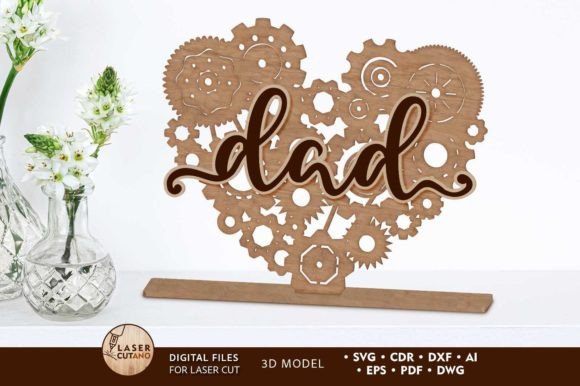
The initial impression of the Dad Decorative Multilayer Template is one of structured warmth. The "standing dad" motif suggests a silhouette that is both iconic and personal. In the context of Laser Cutting, these layers are designed to create physical depth through stacked materials. However, for us embroidery professionals, "multilayer" implies a different challenge: managing stitch density and color transitions to create that same sense of depth without turning the fabric into a cardboard shield. The visual personality here is clean and modern, avoiding the cluttered aesthetics that often plague holiday-themed graphics. This simplicity is its greatest strength, offering a versatile foundation for various embroidery project types.
Real-World Application and Fabric Performance
To truly understand the value of this file, I visualized it on a heavy-weight cotton tote bag, a common request for my Etsy seller clients. The bold lines of the standing figure would likely require a robust fill stitch to ensure coverage. On a natural canvas, the contrast between the thread and the fabric texture becomes crucial. If you are using this as a tote bag design, I recommend using a high-sheen polyester thread to catch the light, giving the flat design a bit of dimensionality that mimics the intended layered effect of the original laser-cut concept.
Another practical scenario is sweatshirt embroidery. Here, the pile of the fleece can swallow fine details. The Dad Decorative Multilayer Template appears to have sufficient spacing between its elements, which is vital. When stitching on textured fabrics, you must ensure that the stitch density is not so high that it causes puckering, nor so low that the underlying fabric shows through unintentionally. For a personalized gift like a father’s hoodie, this design works well because it relies on shape rather than intricate shading. It reads clearly from a distance, which is essential for wearable art.
I also considered its use in baby embroidery projects, such as a onesie or a nursery pillow cover. In these cases, the softness of the garment is paramount. A dense design can feel stiff against sensitive skin. If you adapt this template for infant wear, you might need to simplify the inner layers or use a lighter running stitch outline instead of solid fills. This adjustment maintains the visual identity of the dad figure while ensuring the finished product remains comfortable and durable through multiple wash cycles.
Navigating Technical Challenges
While the aesthetic is appealing, there are areas where caution is necessary. The term "multilayer" in the source file suggests overlapping elements. In embroidery, overlapping colors can lead to excessive buildup if not managed correctly. If you are working with a small hoop size, such as a 4x4 inch frame for an embroidered patch, you must verify that the details do not become muddy. Tiny gaps between layers in a digital SVG can disappear when converted to stitches, resulting in a blob of thread rather than a defined shape.
Curved surfaces present another hurdle. Applying this design to a cap requires careful consideration of the curvature. The straight lines of the standing figure might distort if not properly centered and stabilized. Using a cut-away stabilizer is non-negotiable here to prevent the design from shifting or wrinkling during wear. Additionally, if you are stitching on dark fabric, you cannot rely on the fabric color to define edges. You must ensure that your thread colors have enough contrast, or consider adding a satin stitch border to define the silhouette sharply against the background.
It is also important to address the file format discrepancy. The product is described as an SVG for laser cutters. To use this as an embroidery file, you will likely need to convert it using digitizing software or purchase a specifically digitized version if available. Do not assume an SVG is ready for your embroidery machine. Always check the license terms. Just because a file is labeled for Father S Day does not automatically grant commercial rights for selling custom apparel. Verify whether the creator allows for commercial use of the digitized result before listing items in your small shop product lineup.
Enhancing Brand Value and Customer Trust
From a business perspective, the Dad Decorative Multilayer Template offers a strong return on investment if executed well. Consumers are drawn to designs that feel thoughtful and high-quality. A cleanly stitched dad silhouette on a kitchen towel or apron elevates the item from a generic commodity to a cherished keepsake. This perception of quality builds customer trust and encourages repeat business.
For commercial embroidery providers, consistency is key. This design’s clear lines make it easier to reproduce accurately across multiple units. Whether you are creating a batch of gifts for a corporate client or stocking up for the holiday rush, a design that stitches out reliably saves time and reduces waste. Use printable mockup tools to show customers how the design looks on different colored garments. This helps manage expectations and reduces the likelihood of returns due to color mismatches.
Practical Designer Notes for Success
- Test on Scrap First: Always run a test stitch-out on the actual fabric you plan to use. Check for registration issues between the layers.
- Check Thread Contrast: Ensure your thread colors stand out against the fabric. Low contrast can make the design look washed out.
- Review Stitch Density: If the design feels too stiff, reduce the density in your digitizing software or choose a lighter weight thread.
- Confirm Hoop Size: Measure the design dimensions against your hoop. Ensure there is enough margin for clamping without hitting the design.
- Inspect Small Details: Zoom in on the digital file. Are there tiny elements that might break or tangle? Simplify if necessary.
- Use Proper Stabilizer: Match your stabilizer to the fabric. Knits need cut-away; wovens can often use tear-away.
- Verify Licensing: Confirm if the digital embroidery file or the converted design allows for commercial sales.
In conclusion, the Dad Decorative Multilayer Template is a promising asset for designers willing to put in the technical prep work. It bridges the gap between trendy laser-cut aesthetics and traditional needlework. By paying attention to stitch density, fabric choice, and proper stabilization, you can transform this digital file into a standout handmade product. Whether for a holiday embroidery promotion or a year-round craft business staple, this design holds potential for those who prioritize precision and presentation.