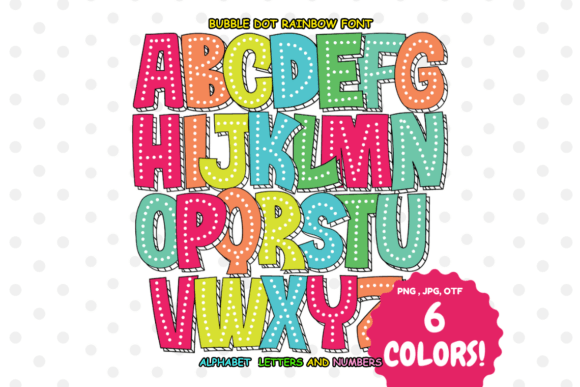
Bubble Dot Rainbow: A Designer’s Review for Embroidery
As a designer who has spent countless hours digitizing and stitching out fonts, I have learned that not every pretty graphic translates well into thread. When I first encountered Bubble Dot Rainbow, my initial reaction was one of cautious optimism. It is listed under Color Fonts, a category that often promises vibrancy but can sometimes deliver a nightmare of thread breaks and excessive jump stitches if not handled correctly. However, after reviewing the visual structure and imagining its application in real-world scenarios, I see genuine potential for this design to elevate specific types of handmade products.
First Impressions: Whimsy Meets Structure
The immediate mood created by Bubble Dot Rainbow is playful and inviting. The design draws inspiration from the whimsical patterns of bubbles and the enchanting hues of a rainbow, resulting in a typographic style that feels soft, rounded, and approachable. For embroidery designers, the shape language is crucial here. The rounded edges suggest that this font will stitch out smoothly, avoiding the sharp, jagged corners that often cause puckering on lightweight fabrics. The "dot" element implies a textured look, likely achieved through a combination of fill stitches and perhaps some strategic running stitches to define the boundaries without adding unnecessary bulk.
Visually, the layout feels balanced. It does not scream for attention with aggressive detailing but rather invites a closer look. This subtle confidence makes it an excellent candidate for projects where the message needs to feel friendly rather than corporate. Whether you are creating a personalized gift for a friend or developing a new line for your craft business, the visual personality of this font aligns perfectly with brands that value warmth, creativity, and joy.
Real-World Application: The Tote Bag Test
To truly evaluate a machine embroidery design, I always visualize it on a specific product. Let us consider a custom embroidered tote bag. Canvas is a forgiving fabric, but it has a distinct texture that can swallow up fine details. With Bubble Dot Rainbow, the robust nature of the letterforms ensures that the text remains legible even against the weave of heavy cotton. Imagine stitching this in vibrant thread colors—perhaps a gradient effect moving from pink to blue across the word. The result would be a tote bag design that stands out at a farmer’s market or a boutique shop.
Another strong contender for this font is sweatshirt embroidery. Hoodies and crewnecks have become staples in the custom apparel market. The puffiness of fleece or French terry fabric pairs beautifully with the bubbly aesthetic of this font. The design does not appear too dense, which is critical when working with stretchy or thick materials. A overly dense fill stitch pattern can cause a sweatshirt to pucker or pull uncomfortably, but the open, airy feel suggested by the "bubble" theme implies a moderate stitch density that should sit comfortably on the garment without distorting the fabric.
Navigating Challenges: Fabric and Hoop Considerations
While Bubble Dot Rainbow shows promise, it is not a one-size-fits-all solution. As an experienced reviewer, I must point out where caution is needed. If you are planning to use this on thin or slippery fabrics, such as silk or lightweight rayon, the weight of the stitches could cause distortion. In these cases, using a high-quality cut-away stabilizer is non-negotiable. Additionally, because the design relies on color transitions to achieve its "rainbow" effect, you must be mindful of how the colors interact with the background fabric.
For instance, stitching light pastel threads on a white tea towel might result in poor contrast, making the design difficult to read from a distance. Conversely, using bright neon threads on a dark navy cap could create a stunning visual pop, but you must ensure that the underlying fabric does not show through the stitches. This is particularly important for embroidered patch creation, where the edges need to be clean and the coverage complete. Always test the design on scrap fabric first. Check how the applique design elements, if any, layer over the base fabric, and verify that the hoop size you intend to use can accommodate the full width of the text without resizing it to a point where detail is lost.
Commercial Viability for Etsy Sellers and Makers
For Etsy sellers and small shop owners, the commercial viability of a font is just as important as its aesthetic appeal. Bubble Dot Rainbow fits squarely into the niche of joyful, family-oriented, and celebratory products. It is ideal for baby embroidery projects, such as onesies or nursery decor, where soft shapes and bright colors are highly valued. It also works well for holiday embroidery, particularly for spring celebrations, birthdays, or pride month merchandise, where the rainbow motif is culturally relevant and visually expected.
When creating printable mockup images for your online store, this font offers a distinct advantage. Its colorful nature photographs well, allowing you to create engaging social media content that stops the scroll. However, remember that what looks good on a screen must also hold up in reality. Ensure that your digital embroidery file is optimized for the machines your customers or your production team uses. While I cannot specify exact file formats or license terms without seeing the specific product package, it is essential to confirm whether the license allows for commercial use of finished items. Most reputable designers provide clear guidelines on whether you can sell the physical finished product or if there are restrictions on mass production.
Technical Notes for Best Results
To get the most out of Bubble Dot Rainbow, consider these practical tips before you hit the start button on your machine:
- Thread Selection: Use high-quality polyester or rayon threads to maximize the sheen and vibrancy of the rainbow effect. Cheap threads may break under the tension of multiple color changes.
- Stitch Type Awareness: Pay attention to whether the design uses satin stitch for outlines or running stitch for internal details. Satin stitches provide a smooth, glossy finish but can be prone to snagging if too long. Running stitches are durable but less visually prominent.
- Contrast Testing: Create a black and white mockup of your design to check for value contrast. If the design disappears in grayscale, it may lack definition on certain fabric textures.
- Washability: If you are creating items that will be frequently washed, such as kitchen towels or children's clothing, ensure that the stitch density is not so high that it creates hard spots in the fabric, which can become uncomfortable over time.
In conclusion, Bubble Dot Rainbow is a charming addition to the library of available Color Fonts. It brings a sense of playfulness and professionalism to design assets intended for joyful occasions. By understanding its strengths in medium-weight fabrics and its limitations in high-detail or low-contrast scenarios, you can leverage this font to create standout small shop products that resonate with customers. Always prioritize testing and proper stabilization to ensure that your final embroidery project reflects the quality and care that your brand represents.