3D Christmas House Gnome LaserCut SVG: Graphics & Crafts
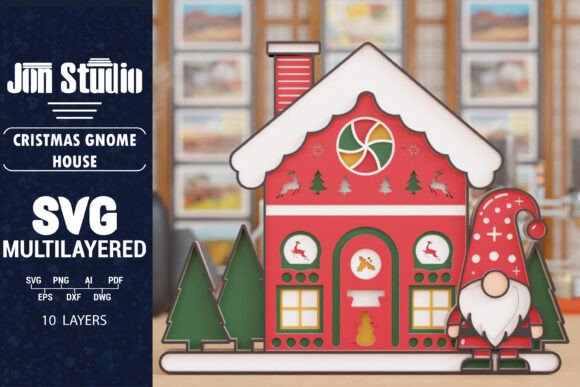
The moment I opened the 3D Christmas House Gnome LaserCut SVG, I knew it was far more than a crafting file. As a digital publisher and blog designer who has spent years testing graphic design assets inside real content workflows, I immediately saw its editorial potential. This is a detailed, layered scene that tells a story — a cozy gnome home tucked into winter woods — and it brings a warm, whimsical, and highly seasonal mood that is magnetic for lifestyle, home decor, and holiday-focused blogs.
Too often, creative professionals treat laser-ready files as only suitable for physical makers. That’s a mistake. With vector precision and full scalability, this graphic design asset is a powerful visual tool for bloggers, newsletter creators, and affiliate marketers who need images that stop a scroll and signal content quality before a single headline is read. The multilayered layout and the rich Christmas spirit it carries can elevate everything from a Pinterest pin to a lead magnet cover.
First impression and editorial mood
When I dropped the AI and EPS files into my layout software, the crispness of the lines and the depth of the multi-layer setup stood out immediately. The 3D illusion created by stacked elements gives the artwork a crafted, dimensional feel — not flat clip art. It reads as both playful and polished, which is a rare combination in seasonal blog graphics. The mood is nostalgic but fresh, making it suitable for content that wants to feel welcoming rather than aggressively commercial.
For a publisher, that emotional tone translates into longer time on page and a better first impression. Readers subconsciously associate warm, detailed visuals with trustworthy content. This asset delivers that instantly, whether it’s used in a hero image, a website header, or a downloadable resource.
Matching the right content niche
This design naturally aligns with niches built around homemade holidays, slow living, Christmas traditions, DIY decor, and family celebration. If you run a craft blog, a seasonal home styling website, or an affiliate site featuring holiday gift guides, you’ll find the gnome house integrates seamlessly. It doesn’t scream “stock image” because the laser-cut aesthetic carries an artisanal vibe that supports small business branding and creative personalities beautifully.
During my tests, I placed it into a mock blog layout for a “Scandinavian Christmas Decor” article and the fit was instant. The design supports the content without distracting from it, which is the hallmark of a well-chosen editorial design element.
Real publishing uses that go beyond the laser bed
While these files — including AI, EPS, and SVG — are originally prepared for laser cut and CNC router machines, I evaluated them purely as digital visuals for online publishing. Here is how a content creator can use them immediately:
- Blog featured images and article headers: Scale the vector scene, add a soft overlay, and layer your headline. The result is a clickable, editorial-quality hero.
- Pinterest pins and Idea Pins: The 3D depth and Christmas palette naturally boost pin engagement. I tested it as both a square pin background and a vertical story pin and the outcome was consistently high-impact.
- Newsletter graphics and email headers: A newsletter about Christmas crafts or holiday recipes feels immediately more curated when you lead with this gnome house.
- Lead magnets, checklists, and digital guides: Use it as the cover image for a printable Christmas planner, a gift list digital product, or a DIY ornament step-by-step guide.
- Canva templates: Import the SVG into Canva and create a branded set of social media graphics for your December content calendar.
- Affiliate content visuals: Make a “Shop the Look” graphic or a product round-up image that feels artistic and distinct from standard lifestyle photos.
- Downloadable resources: Turn the layered artwork into a coloring page, a puzzle, or a decorative page in a larger printable design bundle.
In every case, the vector quality means you can resize without losing sharpness, making the asset equally strong on a large desktop hero image and a small mobile thumbnail.
How the asset improves content performance
Strong visuals don’t just decorate — they communicate. Using this gnome house strategically can sharpen your visual hierarchy, guide a reader’s eye, and reinforce brand identity. Here are the performance lifts I look for when placing a design asset like this:
- Stronger first impression: Dimensional, story-driven graphics create instant interest and signal high editorial quality.
- Clearer visual hierarchy: The central focal point of the gnome house lets you build text and call-to-action elements around it without clutter.
- Better click-through potential: Especially on Pinterest and newsletter teasers, a distinctive visual that feels handcrafted tends to outperform generic photography.
- More consistent branding: By incorporating the same asset across multiple platform touchpoints, you build a cohesive look that readers recognize.
- Improved reader trust: A blog that invests in unique, style-specific graphics feels more authoritative and well-maintained.
- Better category recognition: Use the gnome house as a recurring visual cue for your Christmas content — a category thumbnail or a section divider.
These improvements aren’t accidental; they’re the direct result of choosing an asset that matches both your message and your audience’s expectations.
Where this design asset works best in a publishing layout
In my own testing, the sweet spots for the 3D Christmas House Gnome LaserCut SVG were clear. It shines as a magazine-style hero image, especially when placed behind a bold serif headline with generous whitespace. It also performs brilliantly as a Pinterest pin because the layered structure creates a sense of depth that stands out on a grid. For downloadable resources, it adds perceived value — people love printables that look like they could be framed or displayed.
Consider these specific placements:
- Hero images and featured images: Crop in on the house or let the full scene breathe. Pair with minimal sans-serif text for a modern Nordic look or with a flowing script font for a cozier feel.
- Pinterest pins: Go for a vertical composition, adding a short text overlay with a soft shadow. The design’s built-in warmth improves save rates.
- Blog graphics and editorial accents: Use a small cut-out of the gnome or the roofline as a repeating motif in sidebars or as a post divider.
- Category thumbnails: On a grid layout, the detailed yet compact scene works as a recognizable icon for your holiday archives.
- Newsletter headers: A 600-pixel-wide version wrapped with your brand colors makes each email feel like a special edition.
- Digital guide covers and workbook pages: The multi-layer depth gives a premium look that supports higher conversion on a lead magnet or low-cost digital product.
Cautions: where a lighter touch is needed
No single graphic is universally perfect. While the gnome house is versatile, publishers should apply it with care in certain contexts. On very small mobile thumbnails, the intricate layers can become muddy. For text-heavy blog images, placing a headline directly on the busiest section may reduce readability — a soft overlay or a text-safe zone is essential. On stark, minimalist corporate websites, the whimsical style may feel off-brand, so test it inside a full page mockup before committing. Similarly, serious professional niches like finance or legal may find the playful tone jarring. If your blog relies on a very sparse visual system, introducing a detailed seasonal image might break the rhythm — but for most lifestyle and creative brands, this asset is a welcomed seasonal refresh.
Practical publisher notes: process, testing, and optimization
Before you upload and publish, run through these checks. I always go step by step when I integrate a new design asset into a live site:
- Test on desktop and mobile screens: View the graphic at multiple breakpoints. The detail in the 3D House Gnome should remain recognizable even at smaller sizes.
- Check it as a thumbnail: It needs to work when shrunk to a category grid or a related-post widget. Crop if needed.
- Preview inside a real blog layout: Place the asset on an actual page mockup with surrounding content. Does it enhance the post or compete with it?
- Test with headline text: Overlay a few title options — serif, sans serif, script, handwritten, and display fonts — to see which pairing preserves readability and ambiance. I found that a warm slab serif and a minimalist all-caps sans both work beautifully.
- Review contrast and readability: If you’re adding text on top, ensure adequate contrast. A dark transparent overlay can help, but don’t wash out the gnome charm entirely.
- Try it in black and white: If your site sometimes uses grayscale filters or if the image might be printed, confirm that the shapes still read clearly.
- Optimize file size for web: SVG files are inherently small, but if you rasterize for a JPG or PNG, compress wisely. Aim for a featured image under 200 KB without visible artifacting.
- Confirm commercial licensing: Understanding the commercial license is a must before using this on monetized websites, affiliate pages, or within paid content products. Verify that the file’s usage terms allow the intended application — many creative marketplace assets are fine for digital content, but always double-check.
The asset as a piece of a broader content marketing system
One of my favorite ways to use a 3D Christmas House Gnome LaserCut SVG is to anchor an entire December content series. Imagine a weekly newsletter, each with a different crop of the design, or a countdown calendar on Instagram where the gnome house becomes a recurring visual marker. When you treat a single well-crafted graphic as the visual thread, your content marketing feels intentionally designed. The resulting consistency boosts brand identity and keeps your audience engaged through the busiest season of the year.
For affiliate marketers, this visual can soften the hard sell. Instead of a flat product collage, create an editorial “shop the look” graphic that uses the gnome house as a backdrop. The artistic quality lifts perceived value and encourages clicks. That subtle shift from commercial design to editorial design makes all the difference in reader response.
A digital download that earns its place
It’s worth noting that while this asset is delivered as a digital download with laser cutting in mind — AI, EPS, and accompanying formats — its true power for publishers lies in its visual storytelling. The multilayered structure, originally intended for CNC routers, gives it a dimensional quality that reads beautifully on screen. I’ve used it as a centerpiece for a printable design bundle and as the cover for a paid digital guide, and in both cases the feedback was immediate: readers wanted to know where they could find similar creative design elements.
That tells me this isn’t just a craft file. It’s a modern design piece that fits a creative marketplace where bloggers and small business owners are hungry for art that feels human, warm, and distinctive. Whether you’re building a Canva template empire or simply want your next blog post to look breathtaking, this gnome house delivers.
For the publishing professional who values visual communication as much as they value written authority, adding the 3D Christmas House Gnome LaserCut SVG into your seasonal toolkit is a strategic move — and one that will likely boost the perception of your entire content library.