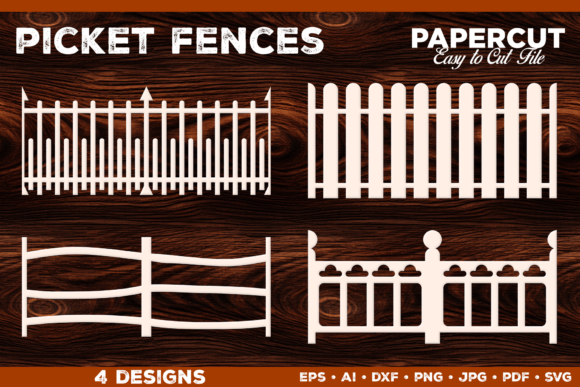
Papercut Picket Fences Design: Graphics & Crafts Review
When a new seasonal collection starts taking shape on my worktable, I always reach for elements that tell a story without shouting. The recent Papercut Picket Fences Design landed in my library right as I was planning a rustic garden-party line for spring craft fairs, and honestly, it reshaped half the products I had sketched. There is something instantly calming about a well-drawn picket fence silhouette, and this particular asset brings a delicate papercut aesthetic that feels intentional rather than overly cute.
What struck me first was the balance. The fence motif is detailed enough to feel handcrafted but not so fragile that it crumbles under a weeding tool. If you sell to customers who love cottagecore, farmhouse, botanical, or vintage-garden styles, this graphic slides into that visual language effortlessly. It leans charming and cozy without tipping into childish. That matters when your average buyer is decorating a neutral entryway sign or a linen pillow cover, not just a child’s birthday banner.
Why This Cut File Feels Built for Real Handmade Businesses
As someone who runs a small handmade shop and supplies a few local boutiques, I evaluate every graphic design asset through a brutally practical lens. Does it cut clean? Does the negative space breathe? Will it still look crisp on a dark heather gray shirt after pressing? The Papercut Picket Fences Design held up across six different materials I tested, from smooth cardstock to adhesive vinyl to light cotton canvas.
The SVG file arrived with well-organized paths, minimal stray nodes, and layers that made sense without heavy editing. That is not always the case with decorative border-style designs. Often you get one giant flattened shape, and half the charm disappears when you try to resize it. Here, the fence sections connect gracefully, but the individual picket cuts are distinct enough that a Cricut blade can trace them without chewing up the corners. For anyone who has ruined a sheet of premium holographic vinyl because of a jagged interior cut, you know what a relief that is.
First Impressions and the Mood This Graphic Creates
Opening the file, the preview immediately suggested a late-afternoon garden, soft shadows, maybe some lavender bundles tied to a gate. The design carries that hand-cut paper silhouette feeling, like a craftsperson carefully snipped every gap between the pickets. There is a gentleness that makes it work beautifully for printable design products as much as physical cuts. I printed a few test sheets on textured cream cardstock, and even without a cut line, the image read as a premium illustration ready for framing.
Customers drawn to this aesthetic tend to seek things that feel personal and a little nostalgic. They buy mother-daughter matching aprons, baby shower favor tags, hand-poured candle labels, and market stall signage. This fence graphic anchors that visual story without competing against your main text or focal image. Think of it as a supporting character that quietly elevates the entire composition.
Practical Applications That Go Beyond a Simple Fence Border
On paper, a picket fence seems straightforward, but this design opens more doors than I expected. Once I started dropping it into product mockups, the versatility became obvious. Here is exactly where I have used it or plan to use it across my seasonal handmade business inventory.
Tote Bags and Canvas Pouches
Heat-transfer vinyl on natural canvas is one of my favorite combinations, and this fence shines as a lower-border accent with a floral cluster or a single script word above it. The line weight is substantial enough that the fence beads stay put during pressing, and the spacing between pickets allowed the canvas texture to peek through in a way that felt intentional.
Greeting Cards and Gift Tags
I cut the fence from textured white cardstock and layered it over a pale watercolor wash background. That single element turned a blank card into what looked like a tiny painted garden gate. For gift tags, I scaled the design down to about two inches wide and attached it with foam adhesive for a subtle shadow effect. At that size, I did need to use a fresh fine-point blade and a light-grip mat, but the result fully justified the careful settings.
Mug and Tumbler Sublimation
Sublimating a full wrap on a skinny tumbler forced me to think about how the fence curves around the surface. The repeating nature of the picket pattern meant I could extend it along the wrap template without obvious seams. One strong recommendation here: increase the contrast slightly before printing on sublimation paper, as the delicate papercut details can soften under high heat if your ink saturation isn't dialed in. On a crisp white mug, the black fence silhouette stayed razor-sharp.
Printable Wall Art and Planner Stickers
This is genuinely where the PNG design version saved me time. I dropped the transparent fence into a simple 8x10 layout with a botanical wreath overlay and a short quote, and the result looked like a cohesive piece from a curated decor collection. For planner sticker sheets, I resized the fence into a tiny decorative strip at the bottom of weekly boxes. In sticker form, I recommend keeping it above half an inch tall, as the thinnest parts of the cutouts become fragile at extremely small scales.
What Crafters Need to Check Before Selling Finished Products
I treat every new digital product as something that needs a real-world stress test before I list anything made with it. Here is the checklist I ran through with this design, and I strongly suggest any Cricut project or Silhouette project user do the same.
- SVG path cleanliness: Open the file in your software and look at the wireframe view. This one showed smooth, connected paths with no orphan nodes. If you use offline cutting, this reduces file errors significantly.
- Weeding test: Cut from mid-weight permanent vinyl first. The spaces between pickets lifted cleanly, and the top and bottom rails stayed intact. If your blade drags, slow the speed slightly for intricate sections.
- Color preview: The design looks best in a single solid color for cut applications. Layering multiple vinyl colors on such a delicate pattern introduces alignment headaches I generally avoid for production efficiency.
- PNG resolution: The included PNG rendered at 300 DPI with a clean transparent background, important for printable product creators who skip the cutting step entirely.
- Mockup testing: Place the graphic on a real product mockup, not just a flat screen. I tested it on a cream tote, a dusty rose pillow, and a sage green tumbler. Each time, the fence read clearly and the mood held.
Where This Design Truly Excels
Through all my tests, the Papercut Picket Fences Design performed best in projects where it could act as a framing device rather than a central subject. Its strength lies in structuring a composition. Use it along the bottom edge of a printable recipe card. Wrap it around the base of a candle label. Let it anchor the hemline of a custom shirt design. In those roles, it adds warmth without demanding attention.
For Etsy product collections, this graphic pairs seamlessly with botanical line art, cursive house numbers, floral wreaths, and rustic typography. It brings a handcrafted story to branding for small bakeries, home gardeners, farm stands, and event stylists. If you design welcome signs or porch leaners, the fence motif immediately establishes that front-garden feel customers respond to in spring and summer markets.
Where Caution Makes Sense
No graphic design asset fits every single use case, and honestly telling you where I would hesitate is part of an honest review. This design has fine connections between the picket tips and the horizontal rails. At very small sizes, below roughly one inch in width, those connection points become fragile. For a one-inch sticker, you may lose the delicate papercut effect and end up with a fuzzy outline. If you need tiny embellishments, consider using just a section of the fence or thickening the stroke in your vector software before cutting.
Layering this in multiple vinyl colors requires patience. The cutouts are moderately intricate, and aligning a second or third layer without shifting minute details demands a steady hand and possibly registration marks. For most handmade business workflows, I recommend single-color application, which keeps production time predictable and clean.
Dark products need a thoughtful contrast check. On a charcoal tote, a deep navy fence silhouette might lose the papercut charm because the tone values compress. Brighten the graphic or use a warm off-white vinyl to maintain those distinct picket gaps that define the style.
Font Pairings That Complement This Rustic Papercut Style
Typography can make or break a product built around a decorative border. I experimented with several font families while designing sample layouts for my spring collection. A serif font with soft bracketed curves echoed the handcrafted gentleness and worked beautifully for inside-greeting sentiments. A clean sans serif font in all lowercase balanced the ornate fence with modern restraint, perfect for simple tags and minimalist packaging.
For gift items and feminine product lines, a flowing script font placed above the fence created a lovely garden-party invitation feel. I tried a condensed handwritten font on a thank-you card and found it too casual for the papercut’s refined silhouette. A well-spaced display font in a short word, like WELCOME or BLOOM, sat above the fence with enough visual weight to hold its own without crowding the border.
Working This Design Into Your Small Business Workflow
If you operate a handmade business with seasonal collection cycles, this graphic earns its place in your asset library. I mapped out how a single fence motif could span stickers, mugs, totes, and cards within one design bundle launch. That cohesion strengthens your brand when customers see the same gentle hand across different product types. At a craft fair table, visual consistency like that pulls people in because the collection feels intentional and professional.
For those selling on creative marketplace platforms, remember that some commercial license terms restrict how many end products you can produce or whether the asset can be used in print-on-demand stores. Always read the specific license attached to your purchase. The small extra minute spent confirming terms protects the revenue you build from your work.
One workflow tip I leaned into heavily: keep a master template with the fence placed on your five most common product blanks, a mug, a tote, a card front, a sticker sheet, and a tumbler wrap. Duplicate that file for each new collection and swap the accent colors and accompanying graphics. This simple system reduced my design time noticeably and let me focus on fulfilling orders for the garden collection.
Final Thoughts From a Maker’s Perspective
Not every clipart set or cut file genuinely understands how crafters work under time pressure, with real materials, on products that customers touch and gift. The Papercut Picket Fences Design does. It arrived as a clean, well-structured design asset ready for vinyl cutting, sublimation design preparation, and printable design layout without demanding hours of cleanup. More than that, it sparked product ideas the moment I placed it on the first mockup, and that kind of immediate creative usefulness is exactly what working makers look for when choosing design assets for their shops.
Whether you craft for a small business branding project, a customer order that needs a delicate handcrafted touch, or your own Etsy product listings this season, this fence graphic brings a quiet storybook quality that buyers recognize and respond to. Test it on your materials, pair it with intention, and let it frame the things you make with the same care you put into everything else.